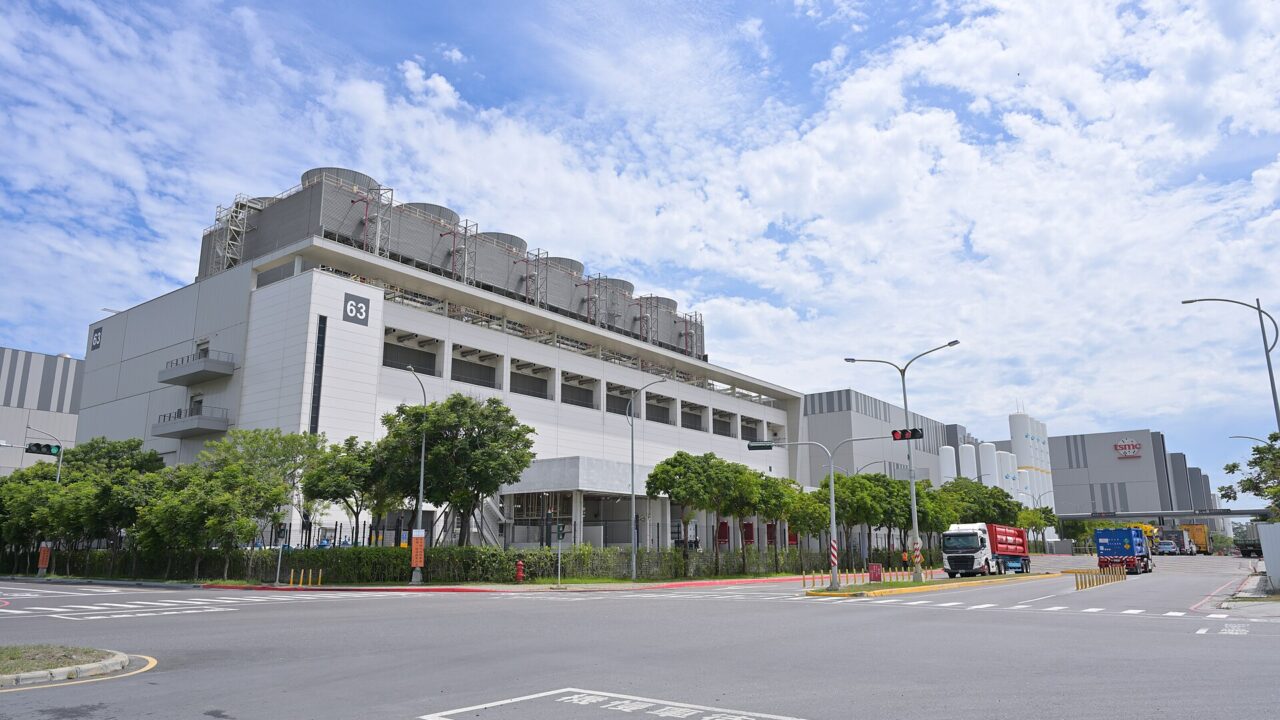
Taiwan Semiconductor Manufacturing Co. reported the most profitable quarter in its history on Thursday, and it did so on a day when investors were busy selling almost everything connected to artificial intelligence. The contrast is the story: while chip stocks across Asia fell sharply, the company that actually manufactures most of the world’s advanced AI chips said demand is still running ahead of what it can supply.
TSMC’s third-quarter revenue reached NT$1,494.24 billion (US$46.72 billion), up 50.9 percent from a year earlier and 17.6 percent from the second quarter — above the top of the company’s own guidance range of US$44.6 billion to US$45.8 billion. Net income rose 68.7 percent year over year to NT$763.06 billion, a record for the sixth consecutive quarter, with diluted earnings of NT$29.43 per share, or US$4.60 per American depositary receipt.
The quarter in numbers
The results cleared Wall Street’s bar as well as the company’s. Analysts polled by LSEG had expected revenue of about NT$1.470 trillion and net income of NT$746.34 billion, according to CNBC’s report on the release; TSMC beat both figures. Gross profit rose 68.6 percent to NT$992.38 billion and operating income rose 75 percent to NT$876.45 billion.
Profitability stayed at levels few manufacturers ever reach. The gross margin was 66.4 percent, the operating margin 58.7 percent and the net margin 51.1 percent. One detail deserves attention: the gross margin slipped 1.3 percentage points from the second quarter, a decline coverage of the results attributed to the cost of ramping up the company’s newest 2-nanometer production. In other words, the margin dip is the price of building the next generation of capacity, not a sign of weakening pricing power.
Advanced chips are now almost the whole business
The revenue mix shows how completely AI demand has taken over the order book. Technologies at 7 nanometers and below accounted for 79 percent of wafer revenue in the quarter. The 3-nanometer node contributed the largest share at 33 percent, followed by 5 nanometers at 28 percent and 7 nanometers at 10 percent. The 2-nanometer share more than doubled in a single quarter, from 3 percent to 8 percent, as volume production began.
By platform, high-performance computing — the category that includes AI accelerators and data center processors — supplied 68 percent of revenue, up from 66 percent in the second quarter and 57 percent a year ago. Roughly two of every three dollars TSMC earned last quarter came from the chips that power AI data centers.
Guidance points higher, not sideways
For the fourth quarter, TSMC guided revenue to between US$52.3 billion and US$54.3 billion, which would be another sequential jump of roughly 14 percent at the midpoint. The company expects a gross margin of 65 to 67 percent and an operating margin of 56.5 to 58.5 percent, and it kept its 2026 capital budget at US$60 billion to US$64 billion. Management also projected full-year 2026 revenue growth of about 44 percent in US dollar terms.
That guidance matters because of who issues it. TSMC sits upstream of nearly every major AI hardware program, from Nvidia’s accelerators to Apple’s processors. Its customers place orders months ahead, so a raised outlook reflects purchase commitments already visible inside the supply chain rather than sentiment.
The market was looking the other way
None of it stopped the selling on Thursday. According to Reuters, TSMC shares fell about 2 percent in Taipei even as the results landed, on a day when South Korea’s KOSPI dropped more than 8 percent and memory chipmakers fell by double digits — the latest leg of a rout that began with fresh competition fears in memory chips and was amplified by hotter-than-expected US inflation data.
That divergence is worth keeping in mind. The selloff is a repricing of how much investors will pay for AI growth when borrowing costs stay high. TSMC’s quarter is a measurement of the growth itself. On Thursday, at least, the measurement said the build-out is still accelerating: record revenue, record profit, a bigger share from the newest technology, and a fourth-quarter forecast that assumes more of the same.
What to watch next is whether the 2-nanometer ramp keeps compressing margins even as it adds revenue, and whether the company’s enormous capital budget — up to US$64 billion this year — starts converting into the capacity its customers keep asking for ahead of schedule.