No customer has received the chip yet. No speeds, capacities or yields have been published. Even so, a weekend conference talk by China’s largest memory maker was enough to knock 5.5% off South Korea’s benchmark index in a single session and send memory stocks lower on three continents.
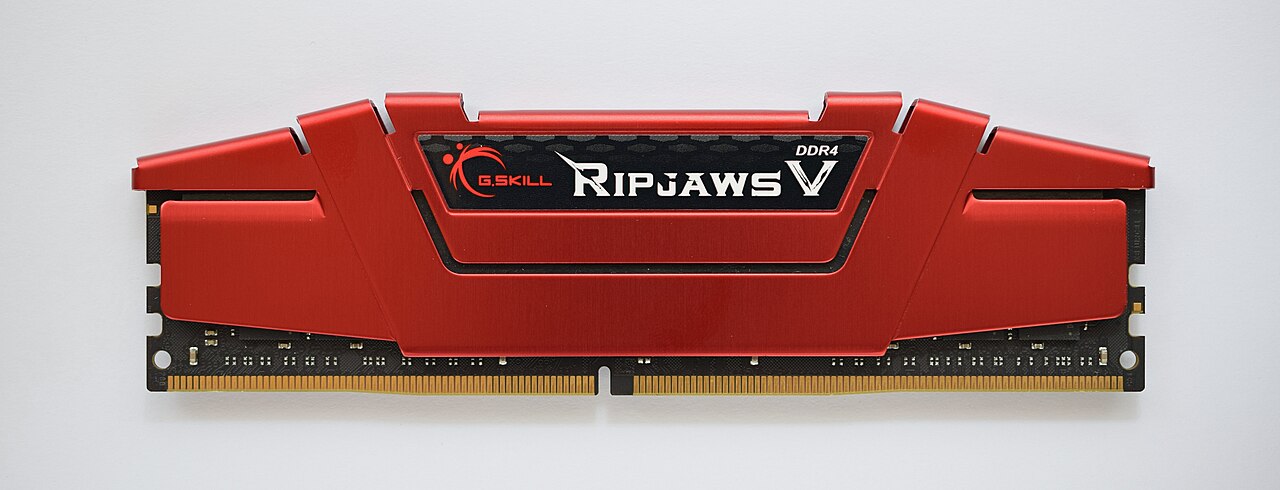
The trigger was ChangXin Memory Technologies, known as CXMT. Its president, Cao Kanyu, told an industry conference in Shanghai on October 10 that the company has made progress on a denser memory-cell design called 4F2 and plans to launch a server memory product built on it — a DDR5 RDIMM module — before the end of 2026, according to TrendForce, which reported the remarks via Yicai Global.
What 4F2 would change
DRAM stores each bit in a tiny cell. The mainstream layout used today, known as 6F2, gives each cell an area six times the square of the smallest feature a factory can print. A 4F2 layout cuts that footprint to four. TrendForce estimates the switch could pack 30% to 50% more memory into the same chip area.
CXMT says it gets there with a transistor design it calls Vertical Surrounded Gate, which stands the channel upright so the gate wraps around it, improving control while reducing leakage. The company also points to work on hybrid bonding, a technique for joining separately made parts of a chip. Cao said CXMT holds more than 300 published patent families tied to the architecture, according to TrendForce’s report. The remarks followed a busy September for the company, in which it announced mass production of its fifth-generation DRAM platform and a new generation of low-power mobile memory.
Why the target matters more than the timeline
Investors were not reacting to a phone chip. Server memory is the high-value segment that feeds AI data centers, and it has long been divided among three suppliers. TrendForce puts Samsung at 39.4% of global DRAM revenue in the second quarter of 2026, SK hynix at 24.9% and Micron at 23.3%. CXMT ranked fourth at 9.5%, up from 7.6% a quarter earlier — already gaining, before any 4F2 product exists.
That is the backdrop against which Seoul sold off on Tuesday. The Kospi closed down 5.5%, its worst day in a slide that has cut the index by about a tenth in five sessions, and trading was paused at one point as selling deepened, Reuters reported. Samsung Electronics fell 7.39% and SK hynix fell 10.09%. Together, the two companies account for more than half of the Kospi by market value, so a bad day for memory is a bad day for the whole Korean market. The irony is hard to miss: only a week earlier, Samsung was reporting a record quarter built on exactly the AI memory demand that CXMT now wants a larger share of.
The selloff reached Wall Street, with a second push
In U.S. premarket trading, Micron fell 2.8%, with Western Digital, Seagate and SanDisk down between 3.5% and 4.5%, Reuters reported. By the close, the damage was narrower: Micron ended down 3.62%, the Philadelphia Semiconductor Index slipped 0.23% and the Nasdaq Composite eased 0.15%, while Nvidia and Broadcom both rose, according to the Seoul Economic Daily’s account of the session.
CXMT was not the only weight on the sector. Reporting by Reuters, CNBC and The New York Times all paired the memory news with fresh scrutiny of AI spending itself, sharpened by Broadcom chief executive Hock Tan’s recent description, delivered in Singapore, of some AI investing as resembling casino gambling. Two unrelated anxieties — that AI spending may be running ahead of returns, and that China’s memory makers may be catching up faster than expected — landed on the same stocks on the same day.
What has not been shown yet
For now, the 4F2 story is a claim and a timetable, not a product. CXMT has published no speeds, capacities, yields or production volumes, and a launch target is not the same as mass-production competitiveness. Server memory also has to pass long customer qualification cycles before it ships in volume, a process that has historically slowed new entrants even when their designs work.
That gap between announcement and evidence is precisely what makes Tuesday’s reaction worth watching. The market did not wait for a datasheet. It repriced the incumbents on the possibility that the most profitable corner of the AI hardware boom — the memory inside the servers — is about to get a fourth serious contestant, years earlier than expected.