Amazon’s cloud is nearly full. CEO Andy Jassy said Friday that Amazon Web Services’ computing capacity is largely sold out through 2027, with a meaningful amount of 2028 already booked — and even the record spending Amazon has planned may not close the gap.
“2027 is largely sold out. We always leave a certain amount for on demand and our inference service bedrock, or EC2, but largely sold out all the big chunks. A good chunk of 2028 is sold out,” Jassy said in a video interview on the a16z Show, speaking with Andreessen Horowitz co-founder Ben Horowitz and general partner Erik Torenberg.
The remarks, first reported by Reuters, amount to a rare public admission from the leader of the world’s biggest cloud provider: the AI boom has turned computing capacity itself into the scarcest commodity in the industry.
Capex at record levels — and still not enough
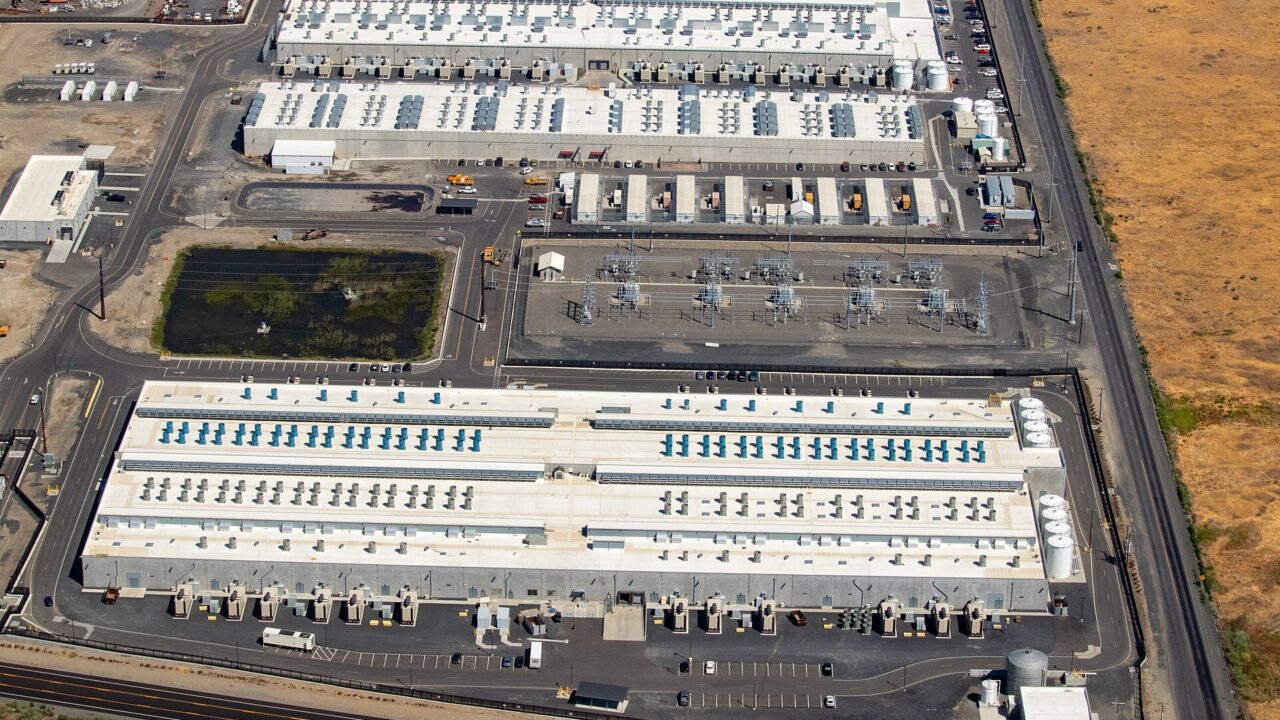
Earlier this year, Amazon said it expected to spend about $220 billion on capital expenditure in 2026, most of it aimed at expanding data-center and AI infrastructure. Jassy said Friday that figure is no longer a ceiling.
The company “could invest a lot more and it wouldn’t be a bad use of capital,” he said, noting that 2026 capacity is already spoken for. The shortage, he added, won’t be a one-year story — supply constraints will land on different components for several years.
Memory is one of them. With only so much memory fabrication capacity to go around, Amazon has to decide how much goes into high-bandwidth memory for AI accelerators and how much stays as ordinary DRAM for the rest of its cloud business, Jassy said.
Inference costs, Trainium, and a promise to existing customers
Jassy also addressed the other end of the AI pipeline. Running models for end users — inference — is still “an order of magnitude too expensive” for enterprises to use everywhere, he said, adding that Amazon’s custom Trainium chips are “a big piece of” driving those costs down.
Pressed by Horowitz on whether AWS might redirect capacity away from longtime customers toward AI labs willing to pay almost anything, Jassy pushed back.
“We’re not going to squeeze our customers,” he said, adding that AWS would make sure existing customers can keep scaling. He drew a comparison to the pandemic, when AWS sent field teams to help customers cut their bills even at the cost of its own revenue.
Jassy also said AWS’s AI business has passed a $25 billion run rate within the first three years of the generative AI wave — a milestone he contrasted with AWS itself, which was doing about $60 million a year at a comparable early stage.
Demand is real. Financing it is the hard part.
Jassy’s comments landed at the end of a brutal week for the companies selling computing power. Shares of neocloud providers — firms that borrow heavily to buy Nvidia GPUs and rent them out to AI companies — tumbled through October as investors questioned the debt behind the build-out.
CoreWeave shares dropped about 29% in October, while Nebius fell roughly 27% and IREN about 32%, according to market data reported this week. On Thursday, both CoreWeave and IREN closed at their lowest prices of 2026. Research firm Gartner warned on October 14 that more than 80% of neocloud providers could lose their independence by 2030 if spending keeps up at its current pace.
The contrast is the story: Jassy’s remarks suggest the underlying demand for compute is genuine — every lab and enterprise wants capacity that doesn’t exist yet. The market turmoil reflects doubt about a different question: which providers can afford to finance the build-out, and whether those bookings convert into profits.
Amazon, with its balance sheet and a record capex plan, is clearly on the demand side of that divide. On Wednesday, AWS began letting Aurora and RDS database customers reserve capacity ahead of time, billed at on-demand rates whether or not the instances actually run — another sign the company is rationing future capacity rather than chasing it.
What’s next
Amazon reports third-quarter results on October 29, and investors will be listening for updated capex guidance and any signs the capacity crunch is easing. Until then, Jassy’s message stands as the clearest signal yet from a hyperscaler: for AI infrastructure, the bottleneck isn’t demand. It’s everything else.