ASML Holding reported the biggest quarter in its history on Wednesday, with total net sales of €11.7 billion ($13.1 billion) and net income of €5.0 billion for the third quarter of 2026. But the number that mattered most was not in the results table. It was in the outlook: customers of the Dutch lithography giant are already asking about equipment orders for 2029 and 2030, and ASML says the supply it has planned for 2027 and 2028 still will not be enough.
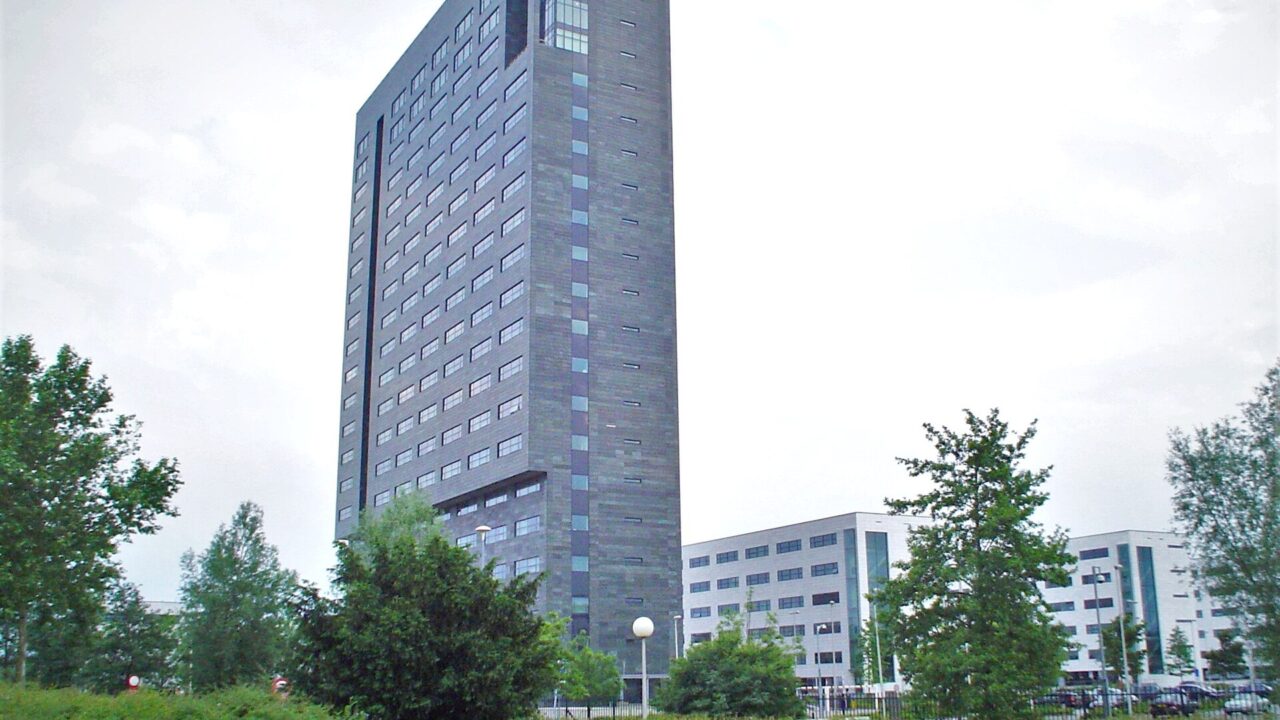
The results, published from the company’s headquarters in Veldhoven, the Netherlands, landed at the high end of ASML’s own guidance. The company is the world’s only maker of extreme ultraviolet (EUV) lithography systems, the machines required to produce the most advanced chips — which makes its order book one of the clearest available gauges of how long the AI investment boom might run.
The quarter in numbers
Net sales of €11,662 million rose about 25 percent from the second quarter and roughly 55 percent from the same period a year earlier. Gross profit reached €6.7 billion, for a gross margin of 57.5 percent — above the 55 to 57 percent range ASML had guided to.
Net income came in at €4,960 million, or €12.95 in basic earnings per share, up from €7.59 in the second quarter. The company sold 113 new lithography systems and eight used ones, compared with 86 new and five used systems in the prior quarter, and ended the quarter with €12.7 billion in cash and short-term investments.
One line did outsized work. Installed Base Management sales — service and productivity upgrades for machines already running in customer fabs — reached €3,289 million, above guidance. In his statement in the company’s release, chief executive Christophe Fouquet credited the margin beat to that upgrade demand, a sign that chipmakers are squeezing more output from installed tools while they wait for new ones.
Guidance goes up again
ASML expects fourth-quarter net sales between €14.2 billion and €15.2 billion, with a gross margin around 57 percent — a step up that implies a very large finish to the year. For full-year 2026, it now expects net sales of €44 billion to €45 billion, raising the bottom of its previous range, with a gross margin around 56 percent.
The company also returned cash at scale, buying back roughly €4.1 billion of its own shares during the quarter under its 2026–2028 repurchase program, and declared an interim dividend of €1.88 per share, payable November 4.
The real story: demand ASML cannot yet supply
Fouquet said customers “continue to increase their short- and medium-term equipment demand forecasts,” driven mainly by their views on the size and duration of AI-related investment. Given that visibility, he added, “some customers are expressing an interest in placing orders with us for 2029 and even 2030.”
That is an unusual sentence for an equipment maker. Lithography systems are planned years ahead, but customers openly shopping for delivery slots four years out — while ASML simultaneously warns that its planned 2027 and 2028 supply will fall short of demand — points to a capacity race, not a passing spike. ASML said it is examining ways to expand its 2028 capacity beyond an increase it had previously communicated.
Markets took the hint
According to Reuters, ASML shares rose about 2.4 percent in morning trading after the release, and European technology stocks recovered ground. The timing helped: the report arrived a day after a global chip sell-off driven in part by questions about Chinese memory competition and the durability of AI spending — the same sell-off that followed CXMT’s 4F2 memory announcement. ASML’s numbers offered the counterargument: whatever investors fear about competition, the companies building AI chips are still ordering the tools to make more of them, years in advance.
Two caveats belong with the headline numbers. First, an earnings release is management guidance, not a guarantee: the 2029–2030 interest is expressed demand, not booked orders, and the fourth-quarter forecast has to be executed. Second, by the consensus estimates cited in market coverage, net sales narrowly missed the roughly €11.72 billion analysts expected, even as profit comfortably beat expectations of about €4.1 billion.
What to watch next is capacity. If ASML turns its examination of 2028 expansion into a concrete plan, it will be the strongest signal yet that the industry expects AI hardware demand to outlast the current build-out. If it does not, the constraint itself becomes the story: the world’s most advanced chips pass through one company’s factories, and that company is saying it cannot build its machines fast enough.