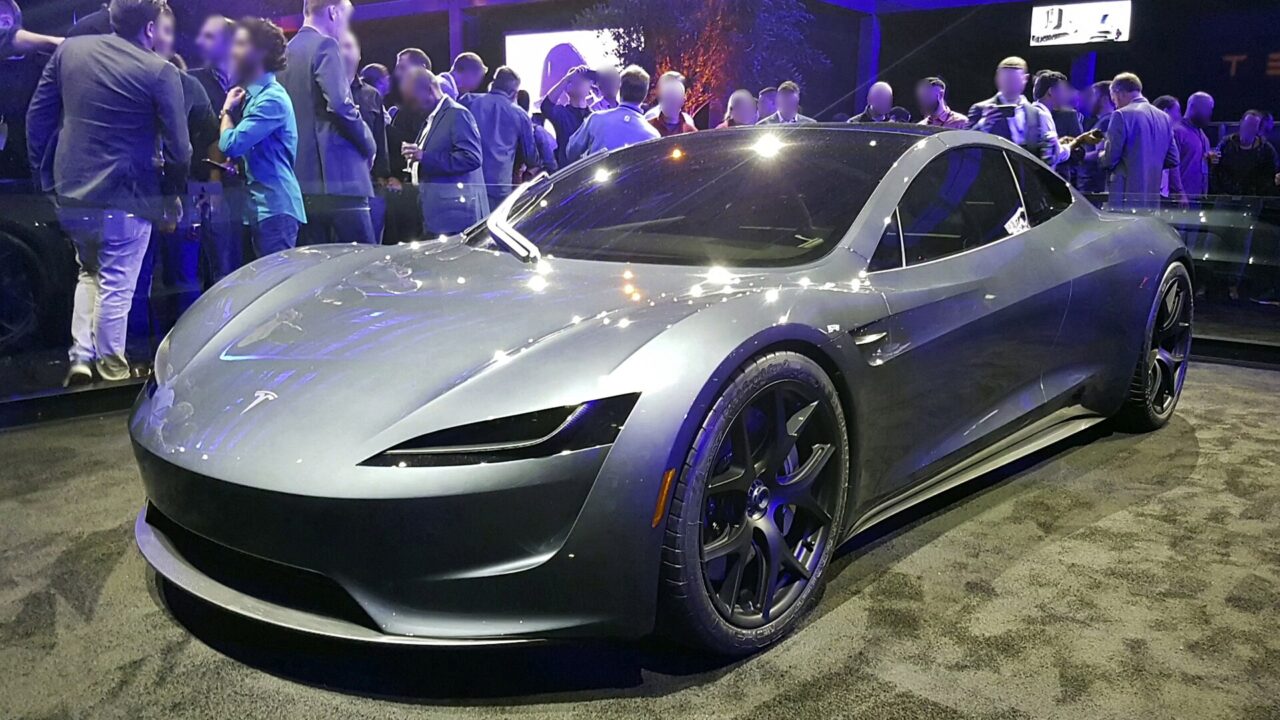
Tesla has finally shown its redesigned Roadster in public, and the car did things no production sports car is supposed to do. At a livestreamed event on October 15 at a SpaceX test facility in McGregor, Texas, the electric two-seater drove upside down on a ramp, lifted into the air and jumped over other vehicles before settling back onto the pavement, according to Reuters reporting on the unveiling summarized by TechXMedia.
The reveal ends a long wait, at least as a demonstration. Tesla first showed the second-generation Roadster in 2017 and initially expected deliveries to begin in 2020. Nearly nine years later, the company is targeting the start of production in 2028, according to Reuters.
What flying means here
The word flying needs a caveat. What Tesla demonstrated was a series of brief aerial maneuvers powered by built-in thrusters, not sustained flight in the way an aircraft flies. The car left the ground, moved through the air and landed. It did not cruise anywhere.
That distinction matters because it frames what the Roadster actually is at this stage: a halo car built around a spectacular propulsion trick, shown in a controlled setting, rather than a new category of transportation. Even so, the demonstration was real, performed in front of an audience instead of rendered in a promotional video.
Thrusters from the rocket side of the house
The hardware comes from Tesla’s collaboration with SpaceX, the rocket company also led by Tesla chief executive Elon Musk. Event reports describe a cold-gas thruster system that uses compressed air to push, lift and stabilize the car, paired with an underbody suction system that can hold the vehicle against an inverted surface while it drives upside down.
Tesla’s performance claims are extreme. The company’s vehicle engineering chief, Lars Moravy, said at the unveiling that the Roadster can accelerate from zero to 60 miles per hour in less than one second and reach a top speed above 230 mph, with a claimed range of more than 300 miles on a single charge, according to Reuters. Those figures are Tesla’s own claims. Reporting on the event noted that the method used to time the launch was not made clear, and no independent verification has been published.
Three versions, one of them not for the road
Multiple reports of Tesla’s presentation describe three planned configurations. The entry Performance version seats two and uses active aerodynamics and suction for downforce. A Thrust version adds rear thrusters for faster launches. At the top sits a single-seat Rocket version with a fuller thruster layout, reported as not approved for use on public roads.
Those details should be read as presentation plans, not final specifications. Tesla has a long record of revising the Roadster’s design, timing and promises, and the gap between the 2017 reveal and the 2028 production target is the clearest evidence of how fluid this program has been.
The unanswered questions are the practical ones
According to Reuters, it remains unclear how thruster features could be used on public roads and what their legal status would be. Tesla has not, in the reporting so far, explained how high the car can travel, how long its stored air lasts at full thrust, what the system does to range, or what kind of license or approval a driver would need.
Price is also unresolved. No final price was established in the Reuters reporting on the event, and the production specifications that will actually reach buyers in 2028 — if the date holds — may differ from the car shown in Texas.
None of that diminishes the demonstration itself. A road car that can hold itself upside down and hop over a lineup of vehicles is an engineering statement, and it fits Tesla’s broader push to present itself as a company working across electric vehicles, autonomous driving and robotics. But a statement is what it remains for now. The Roadster flew, briefly and on cue. Whether it becomes a car customers can buy, drive and legally use as shown is a question Tesla has given itself until 2028 to answer.