Apple’s first foldable iPhone went on sale Friday, and buyers who missed the first wave may wait months. The iPhone Duo, priced from $1,999, reached stores in more than 70 countries on October 23, and Apple said demand was “nothing short of extraordinary.” Delivery estimates for new orders had already stretched into late January, according to Reuters.
The launch was rationed from the start. Apple capped pre-orders at two handsets per customer, and in China, France, Hong Kong, India and Japan, launch-day pickup was limited to customers who had ordered online. The lines that formed started early, Reuters reported.
In Sydney, buyers lined up before 8 a.m. local time, and engineer Simon Krishnan, 48, paid A$3,899 for a 512GB Duo. In Shanghai, 26-year-old healthcare worker Liu Wei, who already owns a Xiaomi foldable, queued at 6 a.m. In Hong Kong, a buyer named May paid HK$17,499 for a 256GB model online to resell it for a HK$4,000 profit. Outside Apple’s Regent Street store in London, 53-year-old charity manager Paul Francis waited overnight in the rain with several dozen other fans.
Two screens, one hinge, no Face ID
Opened, the Duo is the thinnest iPhone Apple has made, with a 7.6-inch inner display. Closed, it works as a 5.4-inch phone that Apple says delivers 90 percent of the screen area of the iPhone 18 Pro. Both screens share the same aspect ratio, so content scales proportionally when the phone folds and unfolds. The inner display carries a nano-texture finish that cuts glare, and both screens offer ProMotion, Always On, and 3,000 nits of peak outdoor brightness.
Apple built the phone around a hinge of more than 100 components, with a grade 5 titanium frame, Ceramic Shield on the back and Ceramic Shield 2 on the front, and an IP68 rating for dust and water resistance. Early reviews praised the build and a barely visible crease, a weak point for foldable screens until now.
The A20 Pro chip uses a 6-core CPU that Apple says runs up to 20 percent faster than the A19 Pro, with a 7-core GPU up to 40 percent faster, built on a 2-nanometer process. A battery on each side of the fold gives up to 31 hours of video playback on the inner display, 44 hours on the outer display, and 24 hours of mixed use. The phone charges to 50 percent in around 20 minutes.
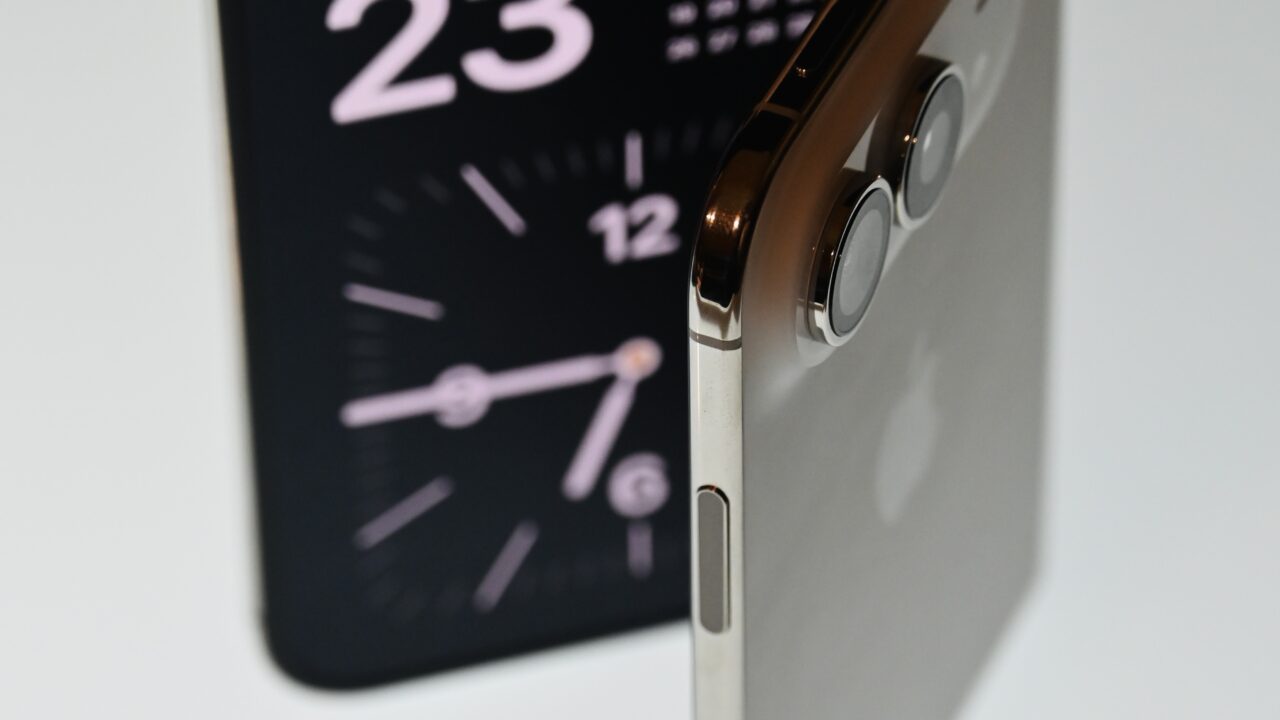
The trade-offs are visible too. The Duo unlocks with Touch ID in the side button, not Face ID, and is eSIM-only worldwide, with no physical SIM tray. Its cameras pair a 48MP Fusion Main camera, with an optical-quality 2x Telephoto built in, and a 48MP Fusion Ultra Wide camera. Reviewers noted the absence of a separate telephoto lens, and said third-party apps still need rework for the new display size. Apple says Apple Pencil support with USB-C arrives later in 2026.
Apple’s chief executive, John Ternus, who took over as CEO in September, called the Duo “the most transformational change to iPhone since the original” when it was unveiled on September 9. The 256GB model starts at $1,999, with 512GB, 1TB and 2TB versions rising to $3,199, or $83.29 a month for 24 months. Cases run $79 for the Duo Case and $129 for the Folio with Kickstand.
Reviewers split on who should buy it
The first verdicts split along a clear line: admiration for the hardware, hesitation about the purchase. Apple writer John Gruber wrote that after a week with the Duo, “it feels like I’ve gotten to use an extraordinarily polished prototype, not a finished product that I’d want to buy and carry.” YouTube reviewer Marques Brownlee said that for a regular user who texts and browses, “it is probably a no.” In Berlin, YouTube creator Patrick Wolter took the other side, telling Reuters that “in the long run, this will likely end up replacing those other devices.”
The Duo is a bigger swing than Apple’s other recent moves, from the $299 HomeView to the decision to tell developers to block AI “nudify” images: a new form factor at the top of the price ladder.
IDC expects Apple to lead foldables by 2027
Market researcher IDC forecasts Apple will capture 44 percent of foldable market value in 2026 on 31 percent of units shipped, then lead the category in both value and units by 2027. Samsung and Huawei have sold premium foldables for years; the launch tests whether Apple can repeat its smartphone playbook in a category it entered late.
“Apple has made a convincing case for this form factor,” IDC vice president Francisco Jeronimo told Reuters after spending a week with the Duo. “Now comes the next test: turning excitement into availability, adoption and a lasting new chapter for the smartphone market.”
Availability is the near-term question. Twenty-eight more countries get the Duo on October 30, and Apple has said nothing about when supply will catch up with the January delivery estimates.
Sources: Apple Newsroom; Reuters via TOB News; Reuters via TipRanks.