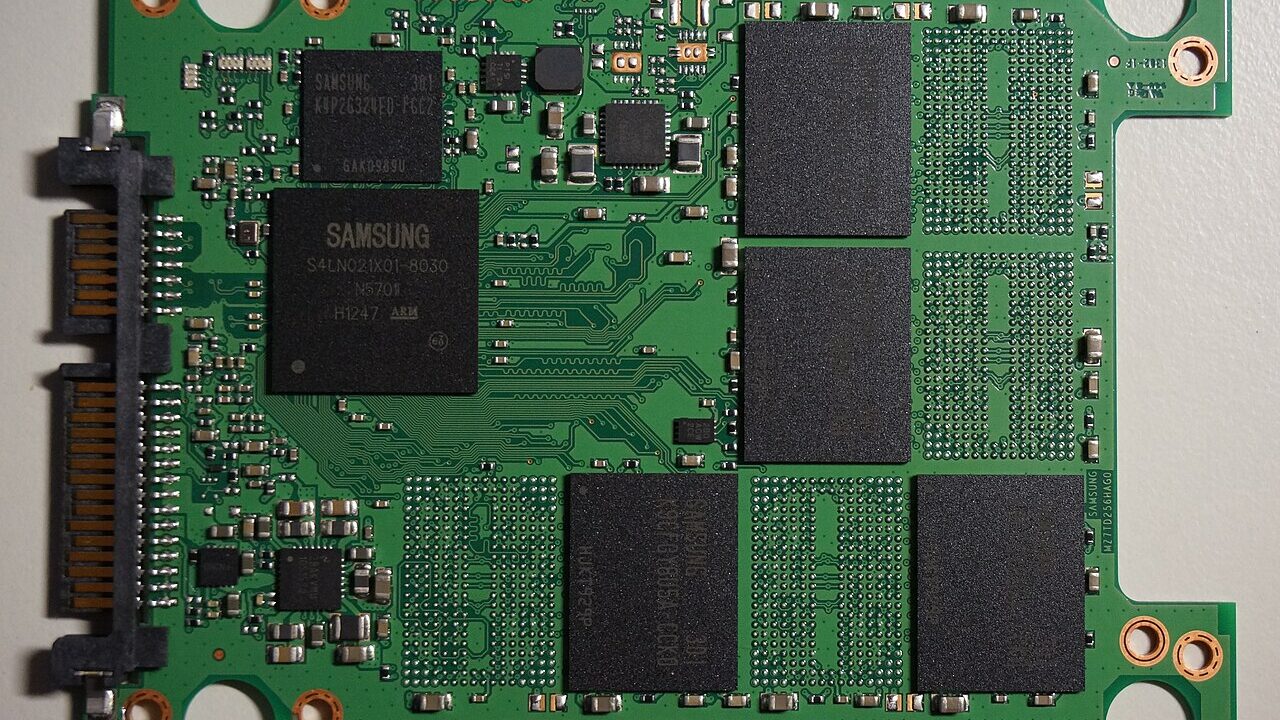
Samsung Electronics and SK Hynix are upgrading their factories in China to produce more advanced memory chips, aiming to fend off a fast-growing Chinese rival and meet huge demand from AI data centers, four people familiar with the plans told Reuters in an exclusive report on Wednesday. Both companies confirmed to Reuters that upgrades were underway.
The target is NAND flash memory — the storage chips that retain data without power and sit inside smartphones, PCs and the solid-state drives used in AI data centers. The more layers a NAND chip stacks, the more storage it holds and the cheaper each gigabyte becomes. The two South Korean companies are working to build NAND with more than 200 layers at their Chinese plants, whose output is currently less advanced than what they make in South Korea, according to the people.
286 layers in Xi’an, 240-plus in Dalian
Samsung’s plant in Xi’an, in northwestern China, accounts for about 40 percent of the company’s global NAND output and currently makes chips with about 200 layers, two of the people said. Under a project known internally as “Monami” — from the French for “my friend” — Samsung is converting the plant to make 286-layer V9 NAND, aiming for monthly output of 5,000 wafers in December and 40,000 wafers a month by December 2027, one of the people said.
SK Hynix, meanwhile, is looking to switch to NAND products with 240 layers or more at its plant in Dalian, in northeastern China, three of the people said. The plant currently makes 192-layer products, one person said. SK Hynix told Reuters it has been installing equipment at Dalian in consultation with the U.S. government.
Upgrading under a licensing cloud
How much the two companies may invest in China has been a difficult question since the United States began imposing export controls on some chip-making equipment in 2022. Both must now seek U.S. licenses every year to install American-made equipment, such as etching machines, in China — and in 2025 the Commerce Department’s Bureau of Industry and Security said it did not intend to grant licenses to upgrade technology or expand capacity at the foreign chipmakers’ Chinese factories.
Samsung said its upgrade was in compliance with U.S. export regulations and was being done in close consultation with Washington, adding: “The upgrade is aimed at meeting growing demand from global customers, including those in the US. The company is not expanding production capacity or constructing new manufacturing facilities.” The industry bureau, for its part, did not directly address Reuters’ questions about the status of the approvals, and pointed back to its 2025 statement. Reuters said it could not determine to what extent U.S. authorities have granted the export licenses the planned upgrades need.
Why now: YMTC took the lead
The pressure is visible in the market shares. While licensing headaches limited the Korean companies’ ability to refit their plants, Yangtze Memory Technologies Co., or YMTC, commanded 38.5 percent of China’s NAND market in the second quarter, up from 28 percent for all of 2025 and overtaking Samsung, according to research firm Omdia. Samsung’s share slipped to 33.5 percent from 36 percent, and SK Hynix’s fell to 17 percent from 20 percent.
YMTC’s lineup is mostly 160- and 232-layer chips, but it also produces a small number of 294-layer chips and plans products with more than 300 layers, according to two people. Outside China, Samsung already sells NAND with up to 286 layers and unveiled a prototype with more than 400 layers in August, while SK Hynix sells chips up to 321 layers — a reminder that it is the Chinese plants, specifically, that have been falling behind.
SK Hynix is also hedging toward the United States. The Dalian site, acquired when SK Hynix bought Intel’s NAND operations in 2021, is the sole NAND manufacturing site of Solidigm, the business now preparing for a U.S. initial public offering. One person said SK Hynix is authorized to make chips with up to 240 layers at Dalian and may seek Washington’s permission to research 300-plus-layer chips there as groundwork for potential production in the United States, and the company is in discussions with the Trump administration over a new U.S. NAND factory.
Investors, at least, treated the news as unambiguously good: shares in both Samsung and SK Hynix ended 6 percent higher on Wednesday after the report was published. What the report leaves unresolved is the question hanging over every wafer the plan produces — how far Washington’s permission actually extends. YMTC did not respond to a Reuters request for comment.