Meta Platforms said on Monday it plans to raise up to $95 billion by selling stock, in what Reuters described as the company’s largest-ever equity fundraising, to pay for its expansion in artificial intelligence infrastructure.
The plan has two parts. Meta launched about $35 billion in public offerings on October 26, and it plans a separate share-sale program of up to $60 billion that would start after its new non-voting Class C shares begin trading, which Reuters reported is expected in the first quarter of 2027.
Meta announced the first part itself. In a press release dated October 26, the company said it launched concurrent offerings of 250 million depositary shares and $22.5 billion of Class A common stock. The depositary shares, each representing a one-twentieth interest in a share of newly issued Series A Mandatory Convertible Preferred Stock, are worth about $12.5 billion. Together with the common stock, they make up the $35 billion now on offer. Meta said the plan supports its “continued investment in AI infrastructure and personal superintelligence.”
The second part is a plan, not a done deal. Meta said it intends to set up an at-the-market program of up to $60 billion, selling shares gradually on the open market. Reuters reported that Meta has not yet finalized the timing and terms of that sale, and the company said the program would start only after Class C trading begins. Readers should not treat the $95 billion total as cash Meta has already received.
That distinction matters more than usual here, because part of the money will not arrive soon even from the offerings already launched. The $22.5 billion of Class A stock is being sold through forward sale agreements, and Meta said plainly: “Meta does not expect to initially receive any proceeds from the sale of shares of Class A Common Stock by the forward purchasers (or their affiliates) in the Common Stock Offering.” The company expects to receive proceeds when those agreements settle, on dates it chooses on or before November 19, 2027. The preferred shares are set to convert automatically into common stock around August 15, 2029, and Meta plans to list the depositary shares on Nasdaq under the ticker METAM.
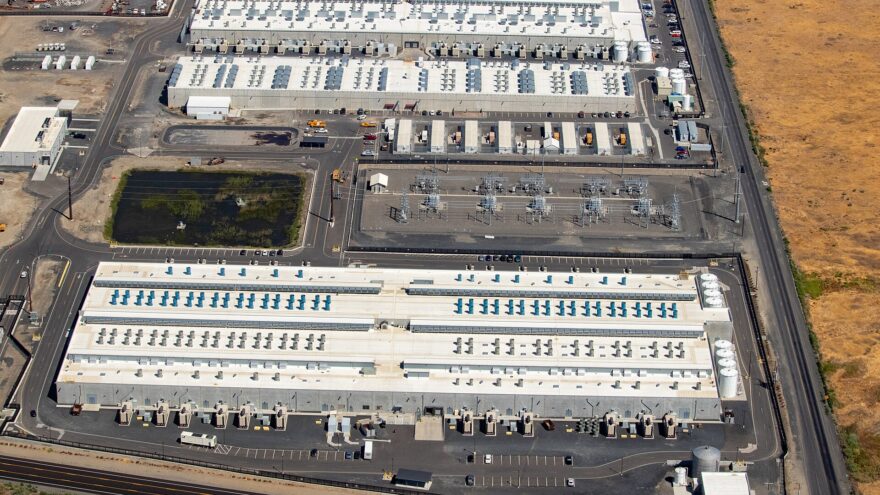
The scale of the spending behind the raise is the reason Meta is turning to shareholders at all. Dow Jones reported that Meta expects capital expenditures of $135 billion to $145 billion this year. That is the bill for the data centers and computing power behind its AI products, and it is the same pressure that has pushed other large tech firms to raise debt and equity instead of funding the buildout from cash flow alone. Meta’s own Muse agent passed 10 million users as that spending pushed its cash flow negative.
One detail of the offering has drawn particular attention: the chip companies that sell Meta its hardware may also buy its stock. Reuters reported that Nvidia, Advanced Micro Devices and Broadcom have indicated interest in buying up to $5 billion of the Class A shares in total. That interest is not binding, and any of the three could buy more, less, or none of it. Still, the arrangement puts suppliers on both sides of the deal, since the same firms that profit from Meta’s chip orders would help fund the customer placing them. Reuters noted that this adds to concern about a circular flow of capital in the AI industry, as chip suppliers help finance the expansion of one of their biggest customers.
The market’s first reaction was skeptical. Meta’s shares fell about 1.4% in morning trading on Monday, according to Reuters. Analysts at William Blair wrote in a note: “We expect investors to continue to question the financing and potential for future capital raises.” The firm added: “Overall, we believe the financing reinforces both Meta’s confidence in the long-term returns from AI investment and the increasingly capital-intensive nature of pursuing that opportunity.”
Meta is not alone in tapping equity markets for AI spending. Reuters noted that Alphabet increased the size of its equity offerings to $84.75 billion earlier this year. The broader pattern is visible across the industry: AWS cloud capacity is largely sold out through 2027, and OpenAI was reported to be near a $30 billion raise at a $1.25 trillion valuation. In that context, Meta’s $95 billion plan is the largest example so far of a funding model the sector is adopting: sell stock now, build data centers now, settle the bill later.
What happens next depends on two dates that are still open. The first is pricing of the $35 billion now on offer, including the preferred shares’ dividend rate and conversion terms, which were blank in preliminary documents. The second is the first quarter of 2027, when the Class C shares are expected to begin trading and the $60 billion program could start. Until then, the $95 billion figure is best read as a ceiling Meta has set for itself, not a sum it holds.
Sources: Meta Platforms press release, October 26, 2026; Reuters, October 26, 2026; Dow Jones Newswires, October 26, 2026.