SpaceX and Tesla have formed special committees to discuss merging, Elon Musk confirmed on Tuesday — the first official sign that the two companies are formally studying a combination he called “a good idea,” according to Reuters. No transaction terms have been agreed, and Musk cautioned that a deal may never happen.
Musk, who leads both companies, said the committees are made up of independent directors and were formed at the request of shareholders, who would ultimately need to approve any deal. He is staying out of the discussions himself. “Because I’m a conflicted party, I can’t actually be in the discussions of the special committees,” he told investors on SpaceX’s third-quarter earnings call.
The remarks sent SpaceX shares up 8 percent in extended trading, while Tesla shares rose 1.8 percent. Musk owns nearly a fifth of Tesla and just under half of SpaceX, and analysts have said a merger would give him control of the combined entity, Reuters reported.
Why Musk says the companies fit
Musk has tantalized shareholders with the idea of combining SpaceX and Tesla before, citing the growing overlap between them. This time he tied the case directly to artificial intelligence. “I do think there’s a lot of merit to combining the companies as we are pretty much in the superintelligence singularity, and there’s a lot to be gained from cooperating on developing superintelligence software, chip design, the Terafab obviously, robotics, mass-to-orbit with the Starmind constellation, connectivity,” he said.
Terafab, the chip manufacturing joint venture between the two companies, should produce its first test chip around May or June of next year and aims to reach volume production by the third quarter of 2028, Musk said on the call.
What a deal could look like
The talks started in recent weeks and could result in SpaceX acquiring Tesla, a person familiar with the matter told Reuters, speaking anonymously because they were not authorized to talk to the media. Tesla has been working with an investment bank to advise it on the discussions, the person said. Neither detail has been announced by the companies.
Speculation had already been building: Barclays suggested last week that a deal could be announced before Tesla’s annual meeting in December. That remains an analyst’s suggestion, not a timetable from either company, and Musk stressed that the committees have not agreed on terms and may never do so.
The quarter that reframed SpaceX
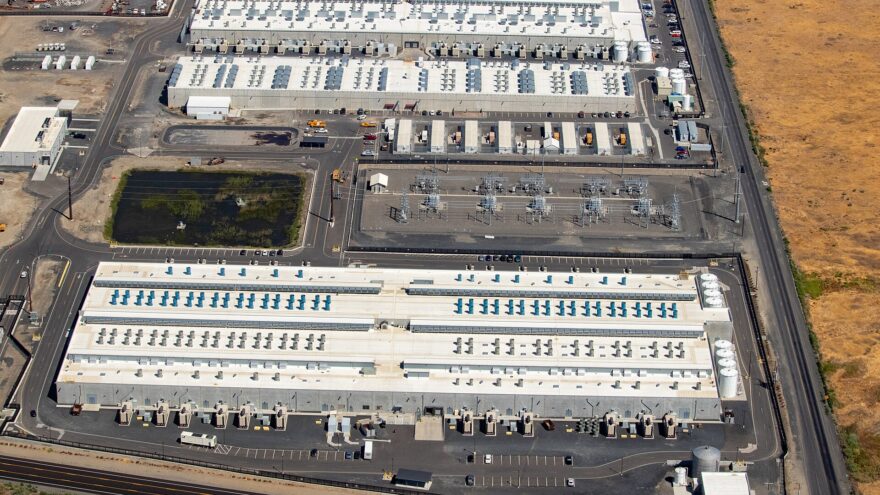
The merger confirmation arrived alongside the clearest evidence yet of what SpaceX has become. Revenue climbed 161 percent to $14.58 billion in the three months ended September 30, Reuters reported, and AI revenue surged almost tenfold to $7.56 billion — mostly from renting out data-center capacity to developers such as Anthropic, Alphabet’s Google and Reflection AI, rather than from SpaceX’s own models.
SpaceX posted its first profit as a public company: net income of $4.4 billion, against a loss of $1.1 billion a year earlier and the $1.57 billion profit analysts had expected. Adjusted earnings came to 45 cents a share, well above the 13-cent average estimate. The spending behind the growth is just as large — capital expenses nearly tripled to $19.6 billion in the quarter, and chief financial officer Bret Johnsen said the company expects $35 billion to $40 billion of capital spending in the fourth quarter.
Musk also said he expected annual recurring revenue of between $500 billion and $1 trillion by the end of 2027, a forward-looking claim tied to demand for data-center space. Starlink, long the company’s financial engine, reached 13.6 million subscribers, above the 12.19 million analysts expected, though average monthly revenue per subscriber has fallen from $99 in 2023 to $69 as cheaper plans expand abroad. Starship, the rocket system meant to carry higher-bandwidth Starlink satellites and orbital AI computing, has yet to enter commercial service.
Analysts see momentum — and a price fight
Early reaction split between enthusiasm for the logic and skepticism about the terms. Gene Munster of Deepwater Asset Management put the chance that “something happens” in the next two years at 95 percent, up from the 90 percent he would have given before the call, according to a Reuters roundup of analyst comments. Dan Ives of Yorkville Ives called the combination “a no-brainer move for both SpaceX and Tesla” that would come down to price, suggesting Tesla shares would likely need to be valued in the $550 range for a deal to be approved.
For now, the decision sits with two committees of independent directors — and, if they ever agree on terms, with shareholders of both companies. Musk’s own verdict was deliberately two-sided: a good idea, in his view, but one where assuming the outcome, as he put it, would be premature.