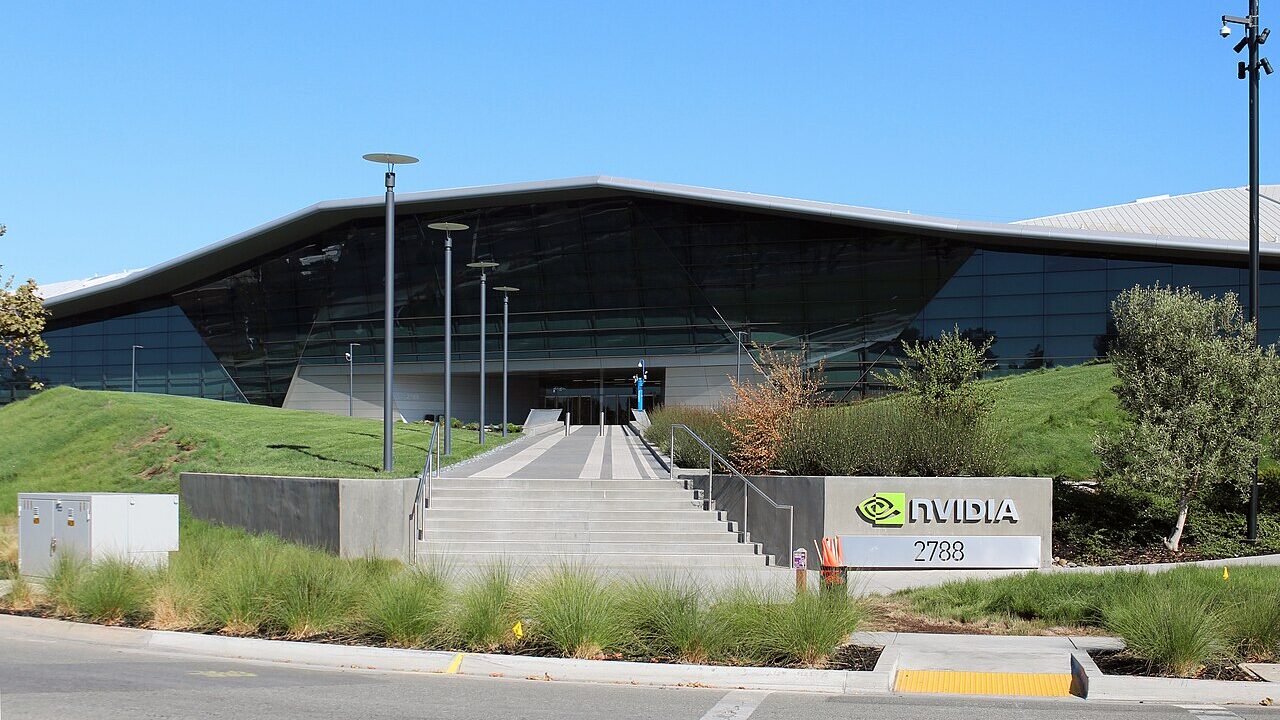
Nvidia is in early talks to deepen its investment in Reflection AI or acquire the open-model startup outright, Reuters reported on Saturday, citing a Financial Times report based on people with direct knowledge of the matter. Neither company has confirmed the discussions: Reflection declined to comment on the report, Nvidia did not immediately respond to a request for comment, and Reuters said it could not immediately verify the FT’s reporting.
That caution matters, because the talks are described as preliminary. According to the FT’s account, an agreement could come together in the coming weeks — or the discussions could still fall apart entirely.
What a deal could look like
The options reportedly under discussion go beyond a straightforward takeover. One possibility is an acqui-hire arrangement, in which Nvidia would bring in Reflection’s staff and license its technology rather than buying the company whole. The FT noted that structure could sidestep a lengthy regulatory review. A larger equity investment is also on the table: Nvidia is already one of Reflection’s biggest backers, having previously put $800 million into the startup, according to the FT.
Reflection was founded in 2024 by two former Google DeepMind researchers, chief executive Misha Laskin and Ioannis Antonoglou, and builds tools that automate software development. The company has been raising money at a steep valuation: in April, Laskin told CNBC it was taking fresh capital at a $25 billion pre-money valuation. How investors value AI labs has been volatile this year — as our reporting on OpenAI’s revenue figures showed, the gap between rumored and actual numbers can move markets.
The structure under discussion says something about the regulatory climate for large AI deals. An acqui-hire transfers the asset a buyer usually wants most in a research lab — the team — plus a license to its technology, without the buyer absorbing the whole company. For a company of Nvidia’s size, that shape can mean a faster, quieter close than a headline acquisition, which is precisely the advantage the FT’s sources pointed to.
Why Reflection, why now
The timing follows the biggest week in Reflection’s short life. On Monday, the company launched Beam, its first open-weight model, aimed squarely at coding and agentic tasks — the same ground contested by lower-cost Chinese models such as DeepSeek and Kimi, TechCrunch reported.
Beam is a text-only mixture-of-experts model with 501 billion total parameters, of which 23 billion are active for any given task. Reflection pretrained it on 23.8 trillion tokens and gives it a context window of 1 million tokens. By comparison, Z.ai’s GLM-5.2 — the Chinese model Reflection benchmarks itself against — carries roughly 744 billion total parameters with 40 billion active.
Reflection’s pitch is efficiency rather than raw scale. The company says Beam matches GLM-5.2 on advanced reasoning benchmarks while using roughly three to four times less inference compute, and it markets the model as a workhorse for enterprises, the public sector, and developers. Those claims have not been independently verified, and Reflection’s own comparison table shows newer Chinese models — GLM-5.3 and Moonshot’s Kimi K3 — ahead of Beam on most tests where both sides publish scores. Beam’s weights are due later this month under an Apache 2.0 license, which is when outside researchers will be able to test the claims directly.
What to watch
For now, there is no deal to evaluate — only reported talks, at an early stage, between a chipmaker that already owns a large stake and a two-year-old lab that just shipped its first model. The next signals will be concrete ones: any statement from either company, and Beam’s public weights release later in October. If the FT’s reporting holds, an agreement could be announced within weeks.