Tech stocks sold off on Thursday after the Financial Times reported that OpenAI has told investors its annualized revenue is nearing $50 billion — roughly $20 billion below the $70 billion figure that had circulated in earlier media reports, including the FT’s own.
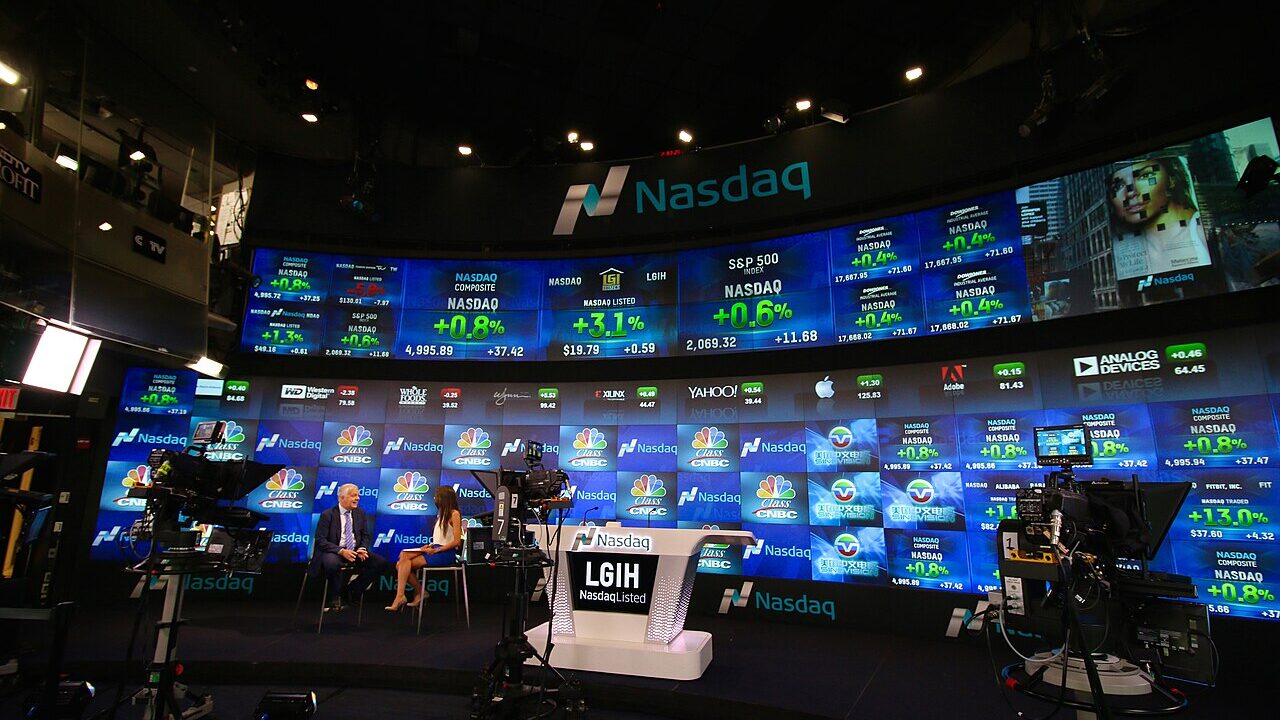
The reaction was swift. The Nasdaq Composite sank 1.25%, its worst day since mid-August, while the S&P 500 fell 0.5%, CNN reported. The selling spread across the companies that build the AI economy: Nvidia fell 2.9%, Intel dropped 5.3%, and Oracle slid 5.5%, with declines accelerating after the FT published its report midday.
The $20 billion gap is mostly accounting
By Friday morning, a more benign explanation was taking hold. A source familiar with the documents told CNN that the $70 billion figure did not come from OpenAI at all. It appears to have been constructed by investors who counted revenue generated through OpenAI’s cloud-computing partners — a gross figure — so it could be compared with rival Anthropic, which reports revenue on a gross basis that includes its cloud partners. OpenAI’s own number, just under $50 billion, is net revenue.
In other words, the “miss” may say more about spreadsheets than about demand for ChatGPT. OpenAI itself declined to comment. For context, Anthropic was reported by Bloomberg and Reuters in August to be on track for annualized revenue above $65 billion on its accounting basis — the comparison that appears to have produced the inflated OpenAI figure in the first place.
What the report does not settle is profitability. The underlying anxiety, as CNN framed it, is whether demand for AI will be strong enough for companies like OpenAI and Anthropic to turn a profit and justify the industry’s enormous spending on the AI buildout — a question that a revenue run-rate, on any accounting basis, cannot answer by itself.
Why a private company’s numbers move public markets
The episode underlines an unusual feature of the current market: the valuations of some of the world’s largest public companies lean heavily on the growth of two private ones. Trillions of dollars in data-center spending — including commitments from the same companies that pledged $2.4 billion in computing credits to a federal science program this week — are justified by the assumption that OpenAI and Anthropic keep growing at extraordinary speed.
“There are going to be tremors throughout all of the related sub-industries,” Ross Mayfield, an investment strategist at Baird, told CNN, noting that the rally has become “a much narrower market that’s dependent on the AI names to keep it afloat.” That dependence is why a single report about a company with no public stock can knock 1.25% off the Nasdaq in an afternoon.
Friday brought a partial rebound — and a warning
Chip stocks steadied in premarket trading on Friday, with Nvidia recovering part of Thursday’s loss, as analysts pointed to the accounting explanation and nerves about OpenAI’s planned IPO calmed, Barron’s reported. Stocks hit hardest on Thursday, such as Oracle and CoreWeave, were recouping only part of their losses.
The fragility showed up elsewhere on Friday: Firmus Grid, a Nvidia-backed company that rents AI computing capacity to customers including OpenAI and Meta, scrapped plans to raise $5 billion in an Australian IPO after investors balked at its proposed $30 billion valuation. With OpenAI’s own IPO postponed until at least next year — a delay CEO Sam Altman announced in September — and Anthropic’s share sale expected this fall at a reported $2 trillion valuation target, the AI trade will keep trading on leaks, estimates, and accounting conventions until public filings provide hard numbers.
What to watch
Anthropic’s IPO filing, when it lands, will be the first document to put audited-style numbers on this market’s assumptions. Before that, watch hyperscaler earnings for any change in AI spending guidance, and treat single-source revenue figures for private AI companies the way Thursday’s market eventually did — as estimates with fine print attached.