Eka Robotics, a startup building robot hands that sense force, has closed a $150 million Series A round that values it at $1.45 billion post-money, TechCrunch reported. The round was led by Andreessen Horowitz and F-Prime, and it bets on an unfashionable idea: that the missing sense in robotics is not sight, but touch.
Eka was founded by Pulkit Agrawal, a professor at the Massachusetts Institute of Technology, and Tuomas Haarnoja, a former Google DeepMind researcher. Both are known for work on reinforcement learning for robot control. Their company pairs a force-sensitive gripper with what it calls a vision-force-action model — a deep-learning system that decides how to move based on what its hand feels, not only on what a camera sees.
Faster than a human picker, by its own count
The headline numbers are Eka’s own, and they are striking. The company says its robot can pick up about 1,500 objects an hour, handling items that weigh up to 1 kilogram, compared with about 600 objects an hour for a human — and that it succeeds on more than 95 percent of picks, including objects it was not trained on, according to TechCrunch and SiliconANGLE. Force sensors in the gripper tell the model how firmly it is holding an object, so it can adjust its grip mid-task if something starts to slip.
“They are already exceeding superhuman performance for certain tasks, and so we think over the next few months there will be superhuman performance in many dexterous manipulation tasks,” Raghu Raghuram, the Andreessen Horowitz general partner who co-led the round, told TechCrunch.
Trained in simulation, not by imitation
Most general-purpose robot models learn by watching — from videos and from human operators teleoperating robots through tasks. Eka instead built a physics simulator that models the forces a grasp will encounter, and used it as a reinforcement-learning environment that can run at scale. The company says it can generate thousands of hours of robot experience in minutes, which frees the model from the limits of collected demonstration data.
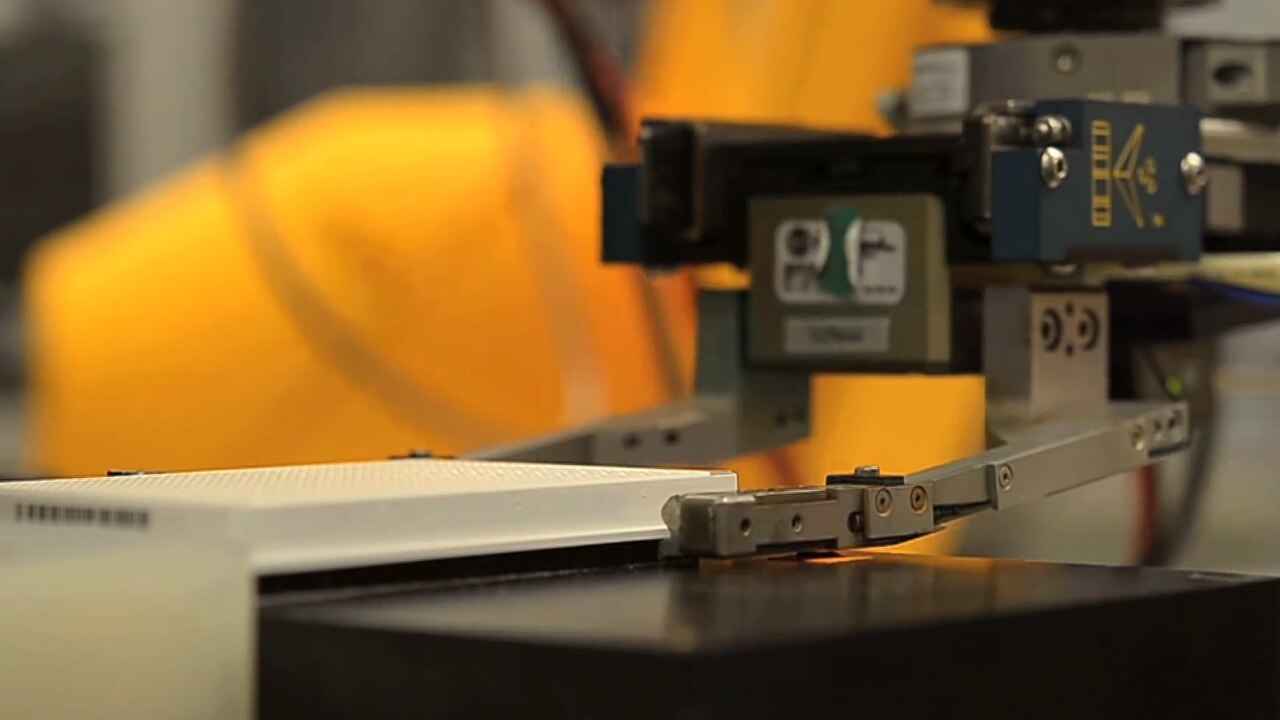
“Vision is not the primary way in which you close this last millimeter problem,” Agrawal told TechCrunch. “Vision tells you roughly where the object is, what the pose is, but the actual grabbing, the actual searching is happening through forces.” The gripper itself is more flexible than traditional designs and carries more force sensors, which is why, in demonstrations described by TechCrunch, the arm can rush toward a person’s hand and slow just in time to touch it gently — and why it does not crush a raspberry.
Outside experts who saw the system were unusually effusive. Kris Hauser, a professor at the University of Illinois Urbana-Champaign, said the demo had a “wow factor” and that the robot “was able to adapt to a large number of different objects without retraining.” An unnamed roboticist at a frontier lab called watching it an emotional experience, comparable to the moment robots first achieved reliable legged locomotion five to ten years ago.
The unproven part
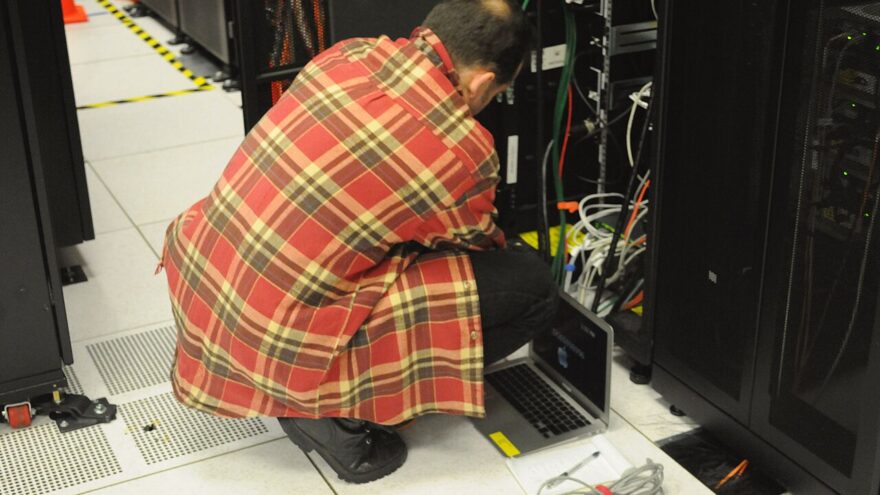
None of that is a factory deployment yet. Eka is running pilots with industrial customers it has not named, on pick-and-place and wire-handling work — the kind of tasks its announcement illustrates with packing strawberries and assembling server racks for graphics processing units. Hauser’s caution was specific: running with integrators on a real assembly line without breaking for an entire year is a different challenge, and whether the technique generalizes beyond pick-and-place remains open.
The hardware has a durability gap to close, too. Agrawal told TechCrunch the gripper costs less than $1,000 and is rated for 5 million duty cycles, against a 20 million cycle standard for industrial arms. Eka’s plan is deliberately narrow at first: “Here are two verticals in pick, arrange, place, and wire handling,” Agrawal said. “Let’s make them be home runs.”
The Series A follows an $11 million seed round co-led by Obvious Ventures and E14 Fund in May 2025, according to PitchBook data cited by SiliconANGLE, bringing total funding to about $161 million. Eka says the new money will extend the model to more tasks and speed up customer deployments — the point at which a remarkable demo either becomes a product, or doesn’t.