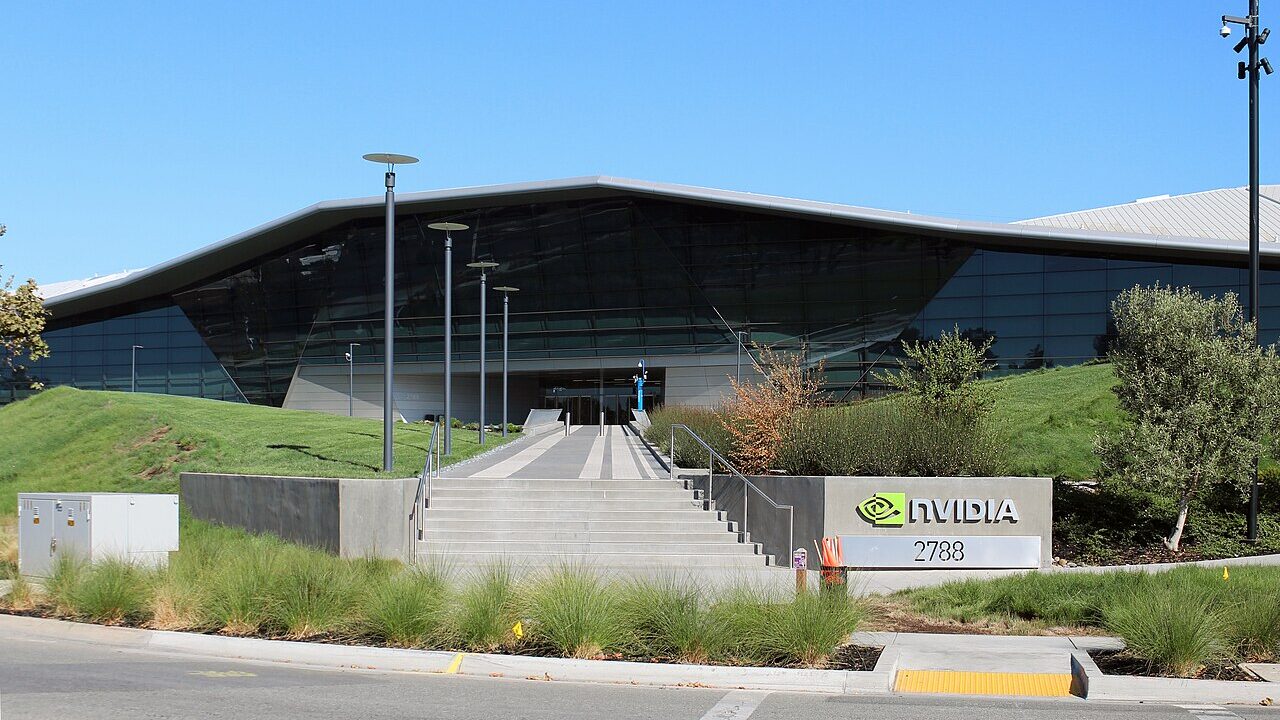
Nvidia is still the biggest supplier of AI chips to China’s data centers, but the lead is no longer comfortable. The company’s share of the market fell to 34% in the first half of 2026, according to IDC data reported by Reuters, as U.S. export controls choked off supplies and domestic rivals led by Huawei filled the gap.
Nvidia shipped 678,000 AI accelerators in China between January and June — down 44% from a year earlier, IDC said. Huawei shipped 572,000 over the same period, up from more than 300,000 a year earlier, giving it a 28% share. Six points now separate the U.S. market leader from its closest Chinese challenger.
The rest of the field is Chinese, and it is growing
Behind Huawei, the ranking belongs to domestic designers. Alibaba’s chip unit T-Head held 7% of the market, followed by Cambricon at 5%, Baidu’s Kunlunxin at 4% and Hygon at 3%, according to IDC. Nine of the 11 Chinese chipmakers IDC tracks shipped more units than a year earlier.
Total shipments across all vendors reached 2.008 million units in the first half, so the market itself is not shrinking. What is changing is who supplies it — and what kind of chip buyers are choosing.
The growth is not in GPUs
Shipments of GPUs, the processors most widely used to train AI models, fell 26% to 991,000 units, IDC said, as the supply of models eligible for sale in mainland China stayed limited. Shipments of other accelerators — chips built for specific AI tasks, such as running trained models — rose nearly 80% to 1.016 million units, overtaking GPUs by volume for the first time in the data.
Four Chinese vendors — Huawei, T-Head, Kunlunxin and Cambricon — together accounted for 95% of that non-GPU segment, which IDC said is being adopted by government agencies, internet companies and telecom providers. The pattern echoes what is happening in U.S. data centers, where buyers are spreading inference work across custom silicon such as Microsoft’s Maia 300 instead of relying on a single GPU supplier.
That split matters because the two categories do different work. GPUs remain the default choice for training new models, while the faster-growing non-GPU segment is built around narrower tasks, above all running models that have already been trained. A market that buys more of the second kind is a market optimizing for deploying AI at scale — and, under current export rules, it is a market where Chinese suppliers face the fewest restrictions on what they can sell.
IDC said competition in China is shifting away from the performance of any single chip toward system-level capability — how well large numbers of chips work together in a cluster. It expects total accelerator shipments in China to grow 19% this year, even as GPU shipments fall 9%.
What the numbers do not say
The data has limits. IDC did not specify which Nvidia products make up the 34% share, or whether it counts high-end chips that are barred from export to China but have reportedly been smuggled into the country. Nvidia did not respond to a request for comment, Reuters reported.
The policy backdrop is unchanged: Washington restricts China’s access to the most powerful U.S. AI chips, while Beijing promotes domestic alternatives and requires Chinese companies to seek approval before importing even the compliant Nvidia models. Nvidia chief executive Jensen Huang has repeatedly criticized the export curbs, arguing that they hand China’s $50 billion AI chip market to Huawei. IDC’s first-half numbers do not prove that outcome — but they show the direction of travel, and it is not in Nvidia’s favor.