Microsoft is putting its own silicon at the center of its AI plans. The company on Monday unveiled Azure Maia 300, the third generation of its in-house AI accelerator, and said it will scale the Maia family to multi-gigawatt deployments starting in 2027 — making Maia the primary system running AI inference for Microsoft’s own products and services.
The scale is the headline. Microsoft plans to deploy potentially more than a million of the chips next year to back its internal AI services, Reuters reported. Chief Executive Satya Nadella described the move on X as the company’s biggest bet yet on its own silicon.
An inference system, not just a chip
Microsoft presents Maia 300 as a complete system — compute, memory, networking and software designed together — rather than a standalone processor. It is built for the workloads Microsoft now runs constantly: long-context reasoning, latency-sensitive conversations and multi-step tasks carried out by AI agents, according to the company’s announcement.
The published specifications are Microsoft’s own. The company lists eight HBM4 memory stacks per accelerator, 18.0 TB/s of peak memory bandwidth and a 950-watt thermal design point. In a full rack of 96 accelerators, that adds up to 27.6 TB of high-bandwidth memory and 1.7 PB/s of aggregate memory bandwidth. Those are vendor figures, not independently verified benchmarks.
The efficiency claim — and its limits
Microsoft’s central argument is efficiency. The company expects Maia 300 to deliver about 40 percent more tokens per megawatt than leading GPU-based systems, and up to seven times the rack-scale token throughput of its predecessor, Maia 200. Tokens per watt is the metric that decides how much AI a data center can serve for a given power bill, so a 40 percent gain at Microsoft’s scale would be significant.
Two cautions apply. Microsoft did not name the GPU systems it compared against, Reuters noted, and the figures are projections for a system that enters production deployments in 2027 — not measurements customers can check today. The company’s Azure hardware chief, Rani Borkar, told Reuters the design aims to get more useful work out of every watt, dollar and byte of memory by optimizing the whole system at once.
Built from chiplets, racked at 167 kilowatts
The hardware takes a different path from Nvidia’s accelerators, Reuters reported. Instead of one massive compute die surrounded by memory, Maia 300’s main processor is assembled from chiplets: key computing functions are built on Taiwan Semiconductor Manufacturing Co.’s 2-nanometer process, while cheaper 3-nanometer chiplets handle jobs such as moving data on and off the processor. That is the same TSMC technology race behind the record AI-chip demand covered in our look at TSMC’s expected sixth straight record quarter.
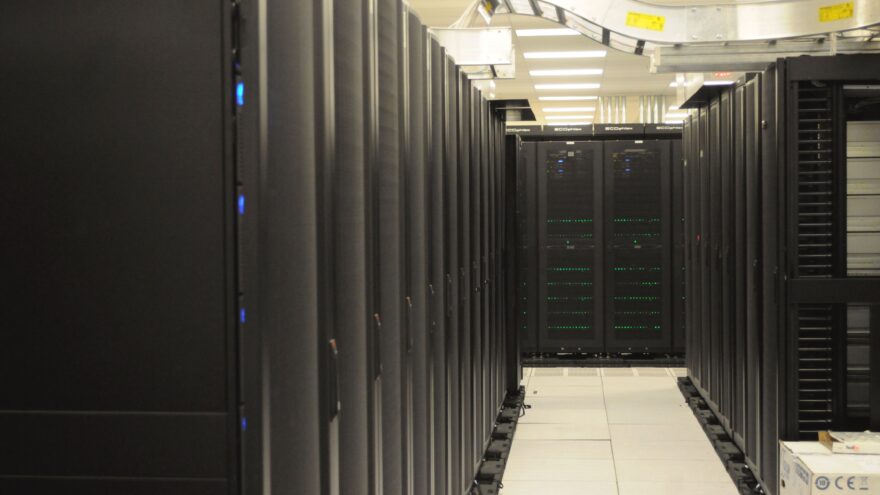
A Maia 300 rack holds 96 chips and draws about 167 kilowatts, Reuters reported, compared with about 142 kilowatts for Nvidia’s recent GB300 racks, which hold 72 GPUs. More power per rack, in other words — Microsoft’s bet is that the work done per megawatt, not the draw itself, is what improves.
Maia 200 is already working
This is an expansion of a running program, not a paper launch. The predecessor chip, Maia 200, is already in production across the United States, Europe and Australia, Microsoft said, running the company’s in-house models as well as OpenAI models delivered through Azure, including features in Teams and Copilot. Microsoft says Maia 200 already delivers up to 1.7 times more tokens per watt than leading GPU infrastructure on some of those built-in AI features — again, a company claim.
Why Microsoft wants its own chips
The context is cost and control. Microsoft has said it expects more than $175 billion in capital expenditures this calendar year, Reuters noted, and every point of inference efficiency shaves a recurring cost that otherwise flows to outside chip suppliers. Microsoft is also not alone: cloud rivals and AI firms have all been fielding custom silicon aimed at loosening Nvidia’s hold on AI computing, Reuters reported.
Nothing in Monday’s announcement says Microsoft will stop buying outside GPUs — its fleet remains mixed, and Maia is aimed first at Microsoft’s own inference workloads. What changes in 2027 is the default: the company’s own products will run primarily on its own chips. Whether the promised efficiency survives contact with real production workloads is the question the rollout will answer.